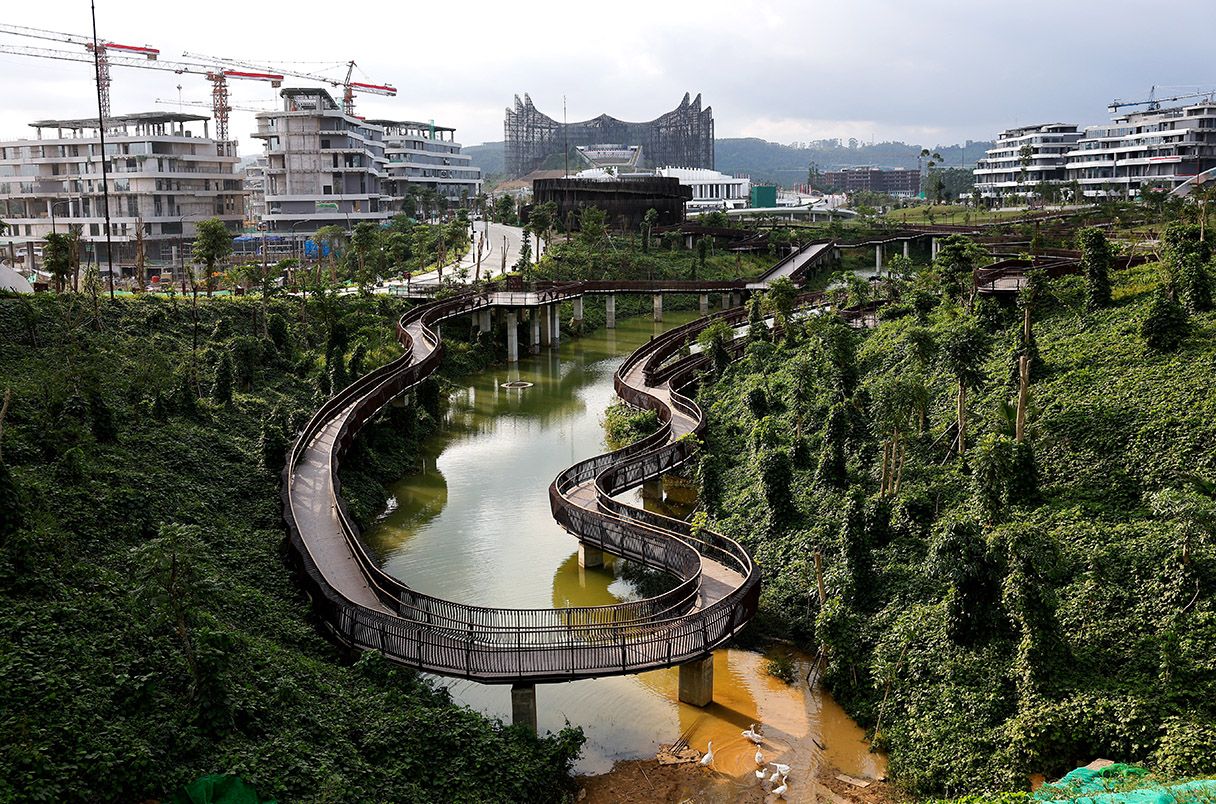
The decision to build a new Indonesian capital city on Borneo in 2019 sparked broad concern and criticism. The first-phase timeline, targeting the inauguration of the central government core area before the end of Joko Widodo’s presidential term, was widely judged as unrealistic. A rush on developing critical infrastructure for “Nusantara,” as the new capital project was known from 2022, cast further doubt on long-term prospects. This article examines the politics of Nusantara’s fast-tracked development from a vantage point after the end of Jokowi’s time as president, exemplifying and extending aspects of extant critical urban studies research on fast urbanism. Leveraging the concepts of projectization and friction, we show how the politics of speed can have a variety of direct consequences and spillover effects. The circumscribed political timeline for Nusantara’s core area has drawn attention to (in)completion and problematic implementation processes. Yet in overcoming politico-bureaucratic inertia, the project has also been generative of a range of new urban aspirations, imaginaries, and innovations, as well as the destructive outcomes and legacies that have been documented in recent urban research on speed.
Share